The listed dates for Paro Tshechu 2026 were 29 March to 2 April. This edition has passed. Use this guide to understand the festival, then check the 2027 planning page for your next visit.
Paro Tshechu brings five days of sacred masked dances to Paro, with the dawn display of the Thongdrel on the final day. If that ceremony is part of why you want to visit, plan your stay around it and confirm the programme before booking flights.
What you're watching
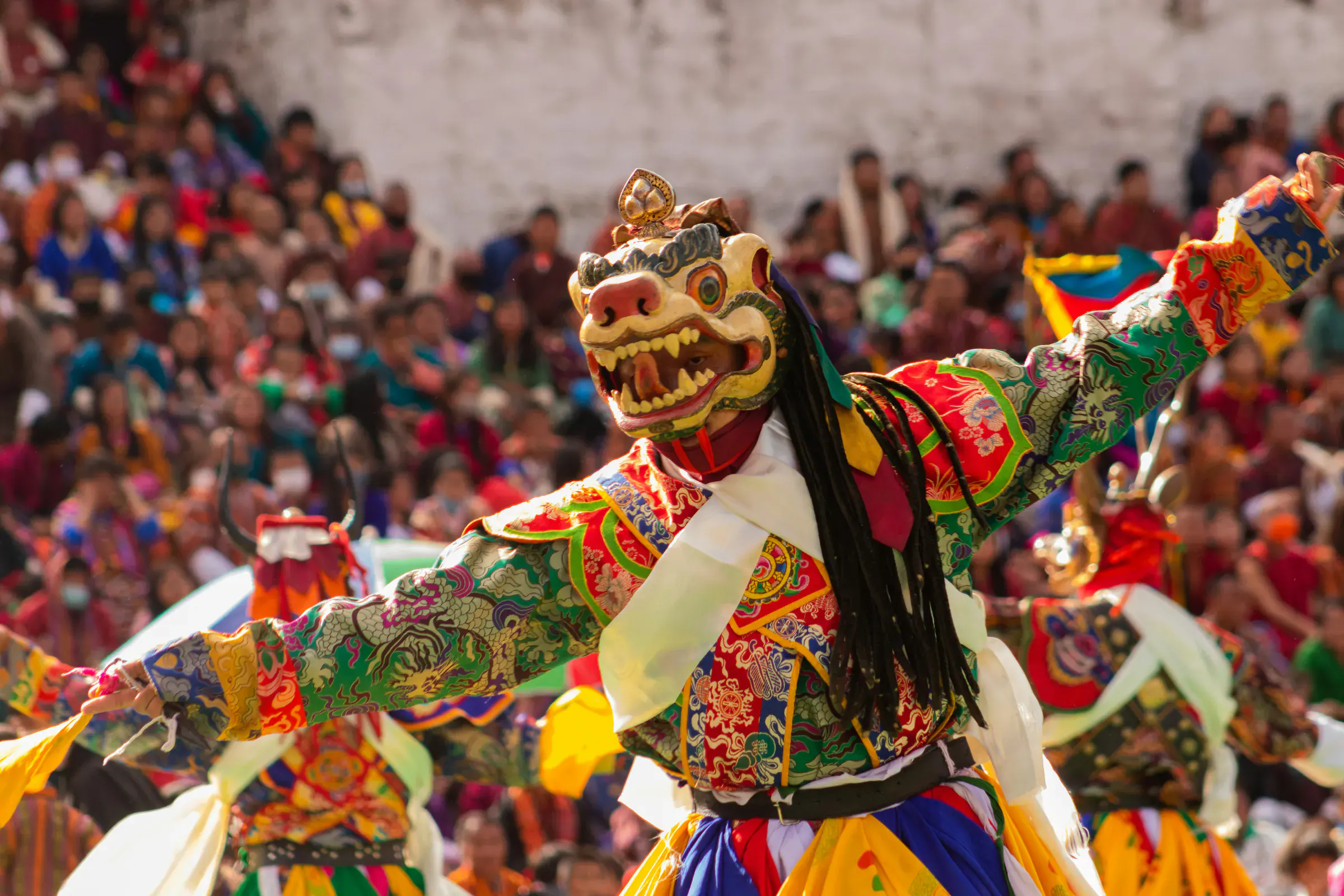
Like every tshechu, Paro's is held in honour of Guru Rinpoche, the 8th-century master who brought Buddhism to Bhutan. The heart of it is the cham, sacred masked dances performed by monks in brocade costumes and carved masks. These aren't performances in the tourist sense, they're rituals, and locals attend to receive the blessing as much as to watch. The ones to look out for:
- Shana, the Black Hat dance, subduing evil spirits
- Guru Tshengye, the eight manifestations of Guru Rinpoche
- Dramitse Nga Cham, the drum dance recognised by UNESCO
- The dance of the terrifying deities, fierce protective spirits in full mask
Just as memorable is everything around the dances. Bhutanese families come dressed in their finest gho and kira, picnic on the festival grounds, and catch up with relatives they may only see once a year. You're welcome in the middle of all of it.
The Thongdrel
The final morning is devoted to the Thongdrel, a large religious textile displayed before dawn. It's displayed for a few hours once a year, and Bhutanese tradition holds that simply seeing it cleanses sins. Be there by 4 to 5 AM with everyone else. Bring a warm layer and discuss the early start with your guide.
How the five days run
| Date | What happens |
|---|---|
| March 29 | Opening ceremonies, first dances |
| March 30-31 | Full days of cham, the main programme |
| April 1 | Climactic dances, evening ceremonies |
| April 2 | Thongdrel at dawn, closing ceremonies |
Exact timings shift with the ritual calendar; your guide will have the daily programme.
Practical notes
Arrive early each day. The courtyard fills fast, by 8 AM the good floor spots are gone. Bring a cushion or small mat, you'll be sitting on stone for hours, plus snacks, water, and sun protection.
Dress and behave as at any dzong. Shoulders and knees covered, hats off in temple areas, move clockwise around religious structures, no flash photography, and ask before photographing people. Don't walk in front of seated viewers during dances.
Pack for changing weather. Late March in Paro is typically 10-20 °C with clear skies and the first rhododendron blooms. Mornings are cold, afternoons warm, layers cover it.
Combine it with Tiger's Nest. Nearly everyone does, the trailhead is just up the valley. Your guide will schedule the hike on a non-festival day, and our Tiger's Nest guide covers how to do it well.
Accommodation is the real bottleneck
Check room availability early if the festival is the main reason for your visit. Compare actual properties and room types, including transfers to the festival. The SDF has no festival surcharge. Package prices, flights and optional hotel upgrades may change, so confirm the full price for your dates.
Booking the trip
A full tour package hasn't been required since September 2022, but a licensed Bhutanese guide is still required for the festival and the dzongs, and between accommodation, permits, the visa, and the SDF ($100 per adult per night), there's a fair amount to line up. Our Festival Journey is built around exactly this: festival days at Paro Tshechu with a guide who can explain the dances, the Tiger's Nest hike, and all the paperwork handled.
Or contact us if you have questions first, we can help you decide how many festival days to include.
Festival dates follow the Bhutanese lunar calendar. The March 29 - April 2, 2026 dates are confirmed. View the full 2026 festival calendar