Kurjey Tshechu was listed for 24 June 2026 at Kurjey Lhakhang in Bumthang. This edition has passed, but the guide below can help you decide whether to include the festival on a future central Bhutan trip. Confirm the next dates before booking.
Bumthang takes more travel time than the western circuit. Build the visit around its temples and valley walks as well as the festival, so you have time to stay after the road journey.
What is Kurjey Tshechu?
Kurjey Tshechu is held to honour Guru Rinpoche (Padmasambhava), the 8th-century Buddhist master who brought tantric Buddhism from Tibet to Bhutan.
The Sacred Imprint
The festival's name comes from the cave at Kurjey Lhakhang. "Kur" means body, "jey" means imprint, Bhutanese tradition holds that Guru Rinpoche meditated in this cave and left a physical imprint of his body in the rock. The imprint is preserved inside the original temple and considered one of Bhutan's most sacred relics.
A Trio of Temples
Kurjey Lhakhang is not a single building, it is a complex of three temples built across four centuries:
- Guru Lhakhang (1652): the original temple, housing the body-imprint cave
- Sampa Lhundrupling Lhakhang (1900): built by Penlop Ugyen Wangchuck, who would soon become Bhutan's first king
- The newest temple: commissioned by the Royal Grandmother in more recent decades
A Quieter Tshechu
Kurjey draws pilgrims to a temple complex with particular importance in the Guru Rinpoche tradition. Ask about the programme and expected visitor access for the edition you plan to attend.
2026 Dates
Kurjey Tshechu 2026: 24 June
Festival dates follow the Bhutanese lunar calendar, typically falling on the 10th day of the 5th month. Schedule and exact timings vary year to year; your guide will confirm the cham programme on arrival.
What to Expect at the Festival
Cham (Sacred Masked Dances)
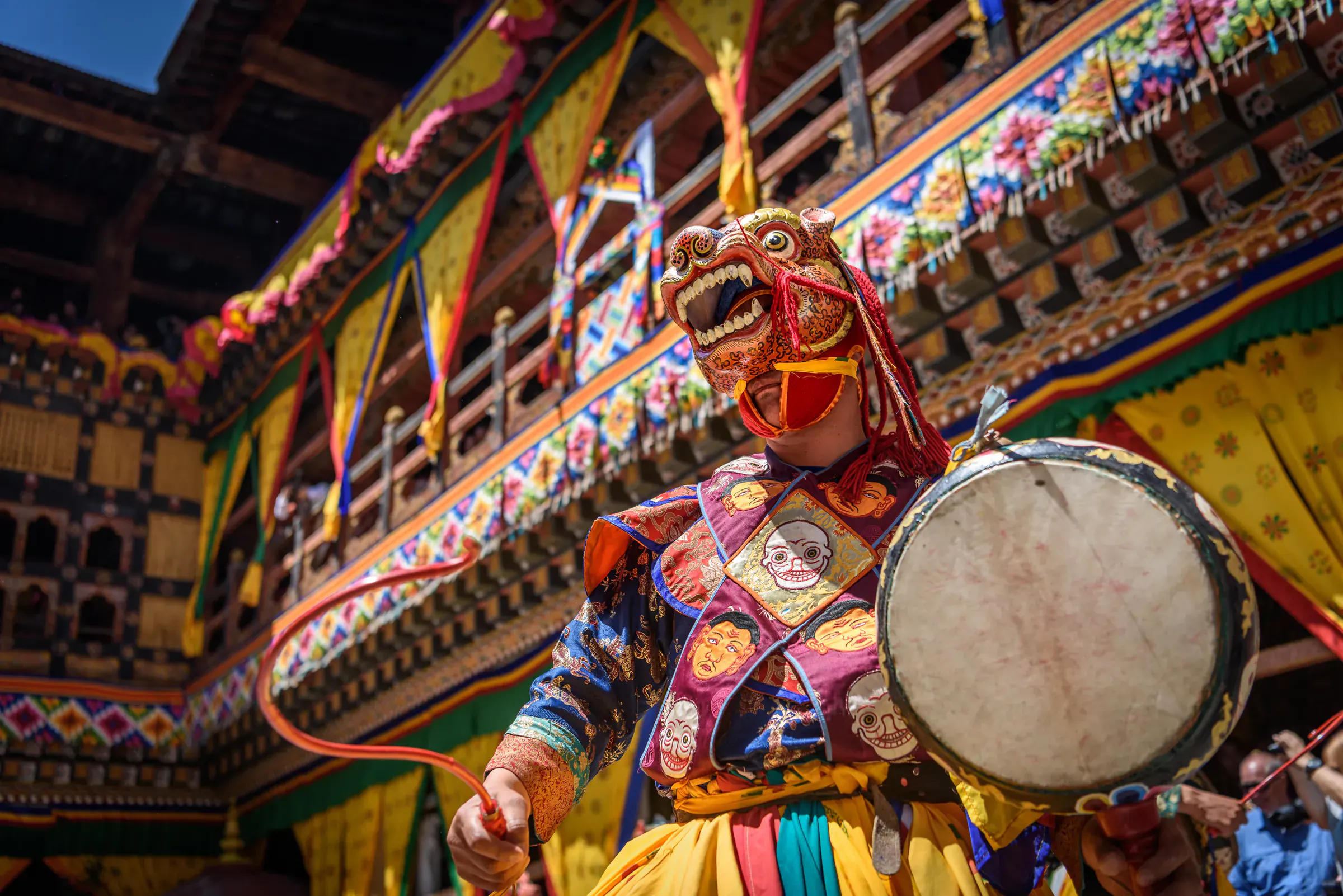
The heart of any tshechu is the cham, masked dances performed by monks in elaborate brocade costumes. Each dance carries religious meaning: subduing demons, blessing the audience, depicting the lives of saints. You don't need to understand the symbolism to feel the energy.
Sacred Music
Long ceremonial trumpets (dungchen), drums, cymbals, and chanted prayers accompany the ceremonies.
The Atmosphere
Bumthang locals dress in their finest traditional clothes, gho for men, kira for women. Families spread blankets in the courtyard, share home-cooked food, and catch up with relatives they may only see at festival time. As a visitor you are welcome to sit nearby, observe respectfully, and join the celebration.
Photography
Outdoor photography of the dances is generally permitted; flash is not. Always ask before photographing individuals, Bumthang locals are usually warm but appreciate the courtesy. Photography inside the temples is forbidden.
Getting to Bumthang
Kurjey Lhakhang sits in Bumthang Valley, central Bhutan, about 270 km from Paro by road. There are two options:
By Domestic Flight (recommended)
Bhutan's domestic airline operates flights from Paro to Bathpalathang Airport in Bumthang, taking around 30 minutes. Book early, the schedule is limited and seats fill quickly during festival season.
By Road
A scenic 8-10 hour drive from Paro through Thimphu, Punakha, and Trongsa, finally reaching Bumthang. Most multi-day Bhutan itineraries break this into two days, with an overnight stop in Punakha or Trongsa. The road is winding but the views, across the Black Mountains and through Yotongla Pass at over 3,400 m, are spectacular.
Building Kurjey Tshechu Into Your Bhutan Trip
Consider combining the festival with time in central and western Bhutan, particularly if you are travelling to Bumthang by road. A typical 8-10 day itinerary looks like this:
- Days 1-2: Paro, arrive, acclimatise, visit Paro Dzong, hike to Tiger's Nest Monastery
- Day 3: Drive to Punakha, visit Punakha Dzong, one of Bhutan's most beautiful
- Days 4-5: Drive to Bumthang via Trongsa, with an overnight stop
- Day 6: Kurjey Tshechu (24 June), full day at the festival
- Days 7-8: Bumthang exploration, Jambay Lhakhang, Mebar Tsho (Burning Lake), local farmhouses
- Day 9: Return to Paro by domestic flight or scenic drive
- Day 10: Departure
This is exactly the kind of itinerary our Bhutan Festival Journey tour is built around, seasonal trips timed to specific festivals with festival-day access, transport, and accommodation pre-arranged.
What to Bring
- Layered clothing: Bumthang in late June is typically 12-22 °C, with warm afternoons and cool mornings
- Light rain jacket: late June is the start of the monsoon; brief afternoon showers are possible
- Comfortable shoes: you'll be on your feet at the festival and on uneven temple grounds
- Sun protection: high-altitude sun is strong even when it feels mild
- Modest dress: covered shoulders and knees; remove hats inside temples
Festival Etiquette
- Move clockwise around religious structures and prayer wheels
- Don't point your feet toward altars or seated monks
- Ask permission before photographing locals
- Silence your phone during ceremonies
- Don't walk directly in front of seated viewers during dances
Bhutan Tourism Rules: A Reminder
Foreign visitors need a licensed Bhutanese guide for cultural sites and trekking, plus permits, SDF, and a visa. We arrange:
- Tourist visa
- Sustainable Development Fee ($100 per adult per night)
- Permits for monastery and dzong access
- Licensed English-speaking guide
- Accommodation, meals, and transport
You can book services independently, but a Bumthang visit needs the transport, rooms and guiding to fit together. We can coordinate those arrangements and confirm whether domestic flights are available for your dates.
Why Choose Kurjey Tshechu Over a Bigger Festival?
Paro and Thimphu Tshechus are spectacular, but they're also crowded. Kurjey offers something different:
- Pilgrimage: learn why Kurjey is important to the people attending
- Sacred location: Kurjey Lhakhang is one of Bhutan's most spiritually important sites
- Valley setting: leave time for walks around Bumthang
- Combine with central Bhutan: Bumthang has temples, hikes, and farmhouse stays that the standard western circuit misses
If you've already been to Bhutan and seen Paro Tshechu, Kurjey is a strong choice for a return visit. If it's your first trip, Kurjey makes an excellent anchor for an itinerary that goes deeper than the typical Paro-Thimphu-Punakha loop.
Ready to Plan?
For a future Kurjey visit, confirm the festival date and accommodation first. Allow enough days for central Bhutan before choosing your flights.
Our Bhutan Festival Journey tour is the seasonal package built around festival dates exactly like this one. Or, if you want a fully customised itinerary that combines Kurjey Tshechu with your specific interests and travel dates, request a custom journey and our team will design a trip just for you.
Festival dates follow the Bhutanese lunar calendar. Dates and exact schedule are confirmed with our local team closer to the event. View full 2026 festival calendar