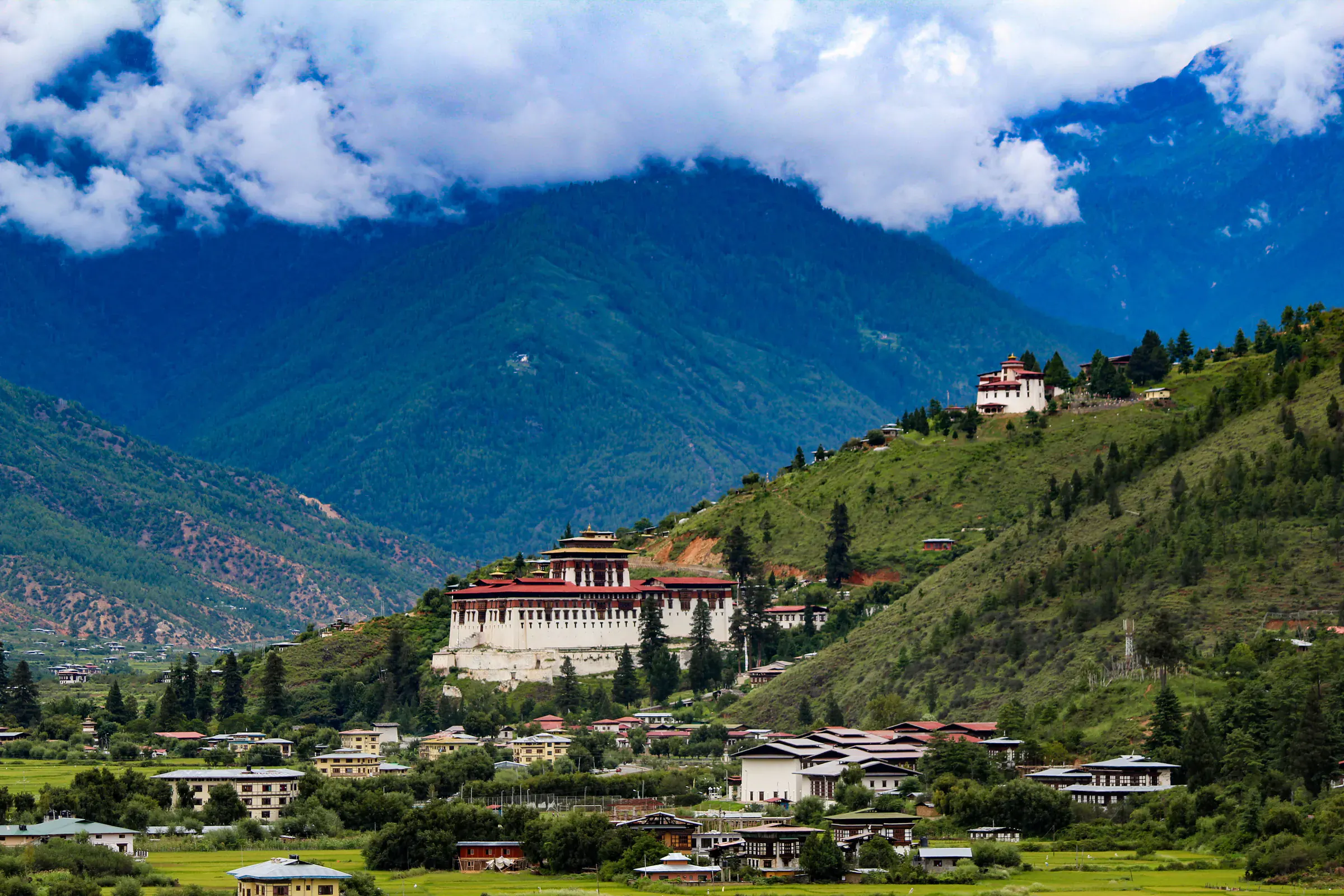
A family trip to Bhutan needs room for breaks. Plan around the drives and walks your children already enjoy, and leave some afternoons free to rest or change plans.
Fewer hotel changes and shorter road days help. Tell your guide about your children's interests and limits before the itinerary is agreed, including when they usually need a meal or a break.
Is Bhutan a good destination for children?
For many families, yes. Bhutan has plenty that children can take part in rather than only look at: archery, easy forest walks, farmhouse visits, prayer flags, suspension bridges, craft workshops, markets, animals, and open valleys.
School-age children often get the most from the trip because they can manage longer drives and understand why a monastery or festival matters. That is not a minimum-age rule. A calm six-year-old who enjoys walking may have an easier time than a restless twelve-year-old who dislikes road travel.
Think about the pace your child can enjoy for a full week, as well as their age.
The child SDF discount is real, but it is not a half-price holiday
Bhutan's Sustainable Development Fee is currently USD 100 per adult per night for most international visitors. Children aged 6 to 11 pay USD 50 per night, and children under 6 do not pay SDF. The government charges a separate one-time visa application fee of USD 40 per traveller.
The official Bhutan Travel FAQ describes the SDF by nights spent in the country. Your arrival and departure dates therefore matter when the final amount is confirmed.
For two adults and two children aged 10 on a seven-day, six-night trip:
| Charge | Calculation | Family total |
|---|---|---|
| Adult SDF | 2 × USD 100 × 6 nights | USD 1,200 |
| Child SDF | 2 × USD 50 × 6 nights | USD 600 |
| Visa applications | 4 × USD 40 | USD 160 |
The family saves USD 600 in SDF compared with four adults. The visa fee does not change.
Hotels, meals, transport, and guide services are different. A child still occupies a seat in the vehicle, eats meals, and needs a safe bed. Some hotels offer child rates or family rooms, while others require an extra bed or a second room. Use the family calculator for a current estimate; room arrangements, availability and the final price are confirmed in your quote.
You can calculate a family trip using the children's actual age bands, then request an exact quote once you know your dates.
Ask about the room, not just the room price
"Can the four of us stay in one room?" sounds like a simple question, but the answer changes from hotel to hotel.
A room that technically sleeps four may mean one double bed and two extra beds with very little floor space left. A large family room can be excellent. Two connecting rooms may cost more but give everyone a better night after a long road day. Some properties have a triple room but no safe option for a fourth guest.
Before accepting a quote, ask for:
- The proposed bed configuration in each hotel
- Whether the rooms connect or sit close together
- Any child breakfast or extra-bed charges
- Whether the room has reliable heating in winter
- Whether there is lift access if stairs are an issue
We prefer to confirm the actual setup rather than write "family room" and leave the meaning vague.
A family itinerary should have fewer bases
Bhutan looks compact on a map. The roads tell a different story. Mountain routes bend constantly, and a short distance can take several hours. Children who are comfortable on straight motorways can still feel sick on the road to Punakha or Bumthang.
For a first family trip, seven to ten nights is a useful range. A simple western route might look like this:
- Arrive in Paro and continue to Thimphu. Keep the first afternoon easy.
- A full day in Thimphu. Mix one important cultural visit with something active, such as archery or the takin reserve.
- Drive to Punakha through Dochula. Stop often and avoid stacking extra sights onto the afternoon.
- A full day in Punakha. The dzong, a village walk, or the suspension bridge can be combined without rushing.
- Return to Paro. Treat this as the main road day.
- A flexible Paro day. Use it for an easy walk, the museum, crafts, or rest.
- Tiger's Nest, if the family is ready. Keep the rest of the day light.
- Depart from Paro.
This eight-day outline leaves time for two-night stays and mostly one main activity a day. The advertised trip length includes the departure day.
Adding Bumthang can be worthwhile for families who have more time, but it should not be squeezed into a short trip simply to collect another region.
The road deserves its own plan
If anyone in the family is prone to motion sickness, tell the operator before the itinerary is final. A few practical choices help:
- Put the most sensitive passenger where they can see forward
- Start after a simple breakfast rather than a heavy one
- Carry familiar snacks and water in the vehicle
- Plan real stops, not only five-minute photo pauses
- Keep medication in hand luggage and ask your doctor what is suitable
- Avoid arriving late, then starting a long transfer immediately
A private vehicle makes family travel much easier because the day can respond to the people inside it.
Food is manageable if you ask early
Bhutanese food can be spicy, but a family does not have to eat chilli-heavy dishes at every meal. Hotels and restaurants can usually prepare plain rice, noodles, eggs, potatoes, vegetables, soups, or milder versions of local dishes when they know what is needed.
Bring a small supply of snacks your children already eat. They are useful on road days and on the Tiger's Nest trail, where hunger can turn a manageable climb into a negotiation.
Tell the operator about allergies in writing. "Not spicy" and "no chilli at all" are not always understood as the same request, so be specific.
Altitude changes how an ordinary day feels
Paro and Thimphu are already well above sea level, and Dochula Pass rises above 3,000 metres. Most family itineraries are not high-altitude treks, but children and adults can still feel tired, headachy, or short of breath.
Keep the arrival day quiet, drink water, and do not schedule Tiger's Nest straight after a late international journey. If anyone develops persistent or severe symptoms, tell the guide and seek medical advice rather than trying to push through the itinerary.
A spare Paro day gives the family time to settle before the hardest walk.
Can children hike to Tiger's Nest?
Some can, some should stop at the cafeteria viewpoint, and some will have a better day doing something else. Age alone does not answer the question.
The trail climbs steadily from an already high starting point. The final approach includes a long run of stone steps down into a gorge and back up to the monastery. Horses can take visitors only as far as the cafeteria area, not through the final section.
Before deciding, think about whether your child can comfortably walk uphill for several hours, manage uneven steps, follow instructions near drops, and accept that turning back is not a failure.
Our Tiger's Nest hiking guide now includes a family decision plan, turnaround options, and what parents should carry.
What children tend to remember
Adults often plan Bhutan around monuments. Children tend to remember participation.
Good family moments can be very simple:
- Trying archery with a patient instructor
- Crossing a suspension bridge in Punakha
- Watching prayer flags move at a mountain pass
- Making or painting something in a craft workshop
- Visiting a farmhouse and seeing how food is prepared
- Spotting takin near Thimphu
- Walking through rice fields or a village rather than driving past
- Attending part of a festival, then leaving before everyone is exhausted
Bhutan Travel's own family activity guide highlights outdoor space, archery, nature, and hands-on experiences. The useful lesson is to alternate cultural visits with something children can do physically.
What to pack differently for children
The normal Bhutan packing list still applies, with a few family additions:
- Broken-in shoes with grip, not new hiking shoes bought for the trip
- A warm layer that fits in the day bag
- A light rain shell in every season
- Sun hats, sunscreen, and refillable water bottles
- Familiar snacks for transfers and walks
- Any prescription medicine in original packaging
- A compact activity for road journeys
- Spare socks on hiking days
Temple clothing rules apply to children too. Covered shoulders and knees make entrances simpler, and shoes that are easy to remove help on days with several sacred sites.
Questions worth asking before you pay a deposit
A good family quote should answer these without defensiveness:
- What is the longest driving day, and how many hours is it realistically?
- What exact room and bed setup is proposed at each hotel?
- Which days can be shortened if the children are tired?
- Is Tiger's Nest optional, and what is the alternative plan?
- Are the children's SDF rates itemised correctly?
- Which meals are included, and can dietary needs be confirmed in advance?
- Will the vehicle have enough room for the family and luggage?
- Who do we contact if the plan needs to change during the trip?
If a quote only lists hotels and attractions, it is not yet a family plan.
Start with the family, then choose the route
The most useful information you can give us is not a list of sights. Tell us the children's ages, how they handle long drives, whether they hike regularly, what food they eat, and what a successful day looks like for your family.
From there, we can choose the route, check room configurations, price the correct SDF, and leave enough space for everyone to enjoy being in Bhutan.
Plan and price your Bhutan family trip, or go directly to a family-prefilled quote request. No payment is required to receive the itemised proposal.
Government fees and entry rules can change. We verify the applicable SDF, visa process, and hotel child policies again when preparing the final quote.