A week gives you time for the three western valleys if you keep the route focused. This plan puts Tiger's Nest near the end, with time to settle into the altitude beforehand. Allow for several road transfers, and choose a longer stay if you want more days in one place.
This route starts and ends at Paro Airport. It includes six nights, with departure on day seven.
At a glance
| Day | Base | Highlights |
|---|---|---|
| 1 | Paro | Arrival, Rinpung Dzong, Paro town |
| 2 | Thimphu | Drive to the capital, cultural visits and markets |
| 3 | Punakha | Dochula Pass, Punakha Dzong |
| 4 | Punakha | Chimi Lhakhang, valley walk or suspension bridge |
| 5 | Paro | Drive back, rest and prepare for the hike |
| 6 | Paro | Tiger's Nest (Taktsang) hike |
| 7 | Departure | Transfer to Paro Airport |
Day 1: Arrive in Paro
The landing into Paro is famous. The runway sits in a narrow valley and only a small number of pilots are certified to fly it, so the approach banks between hills before dropping in. It's dramatic, not dangerous.
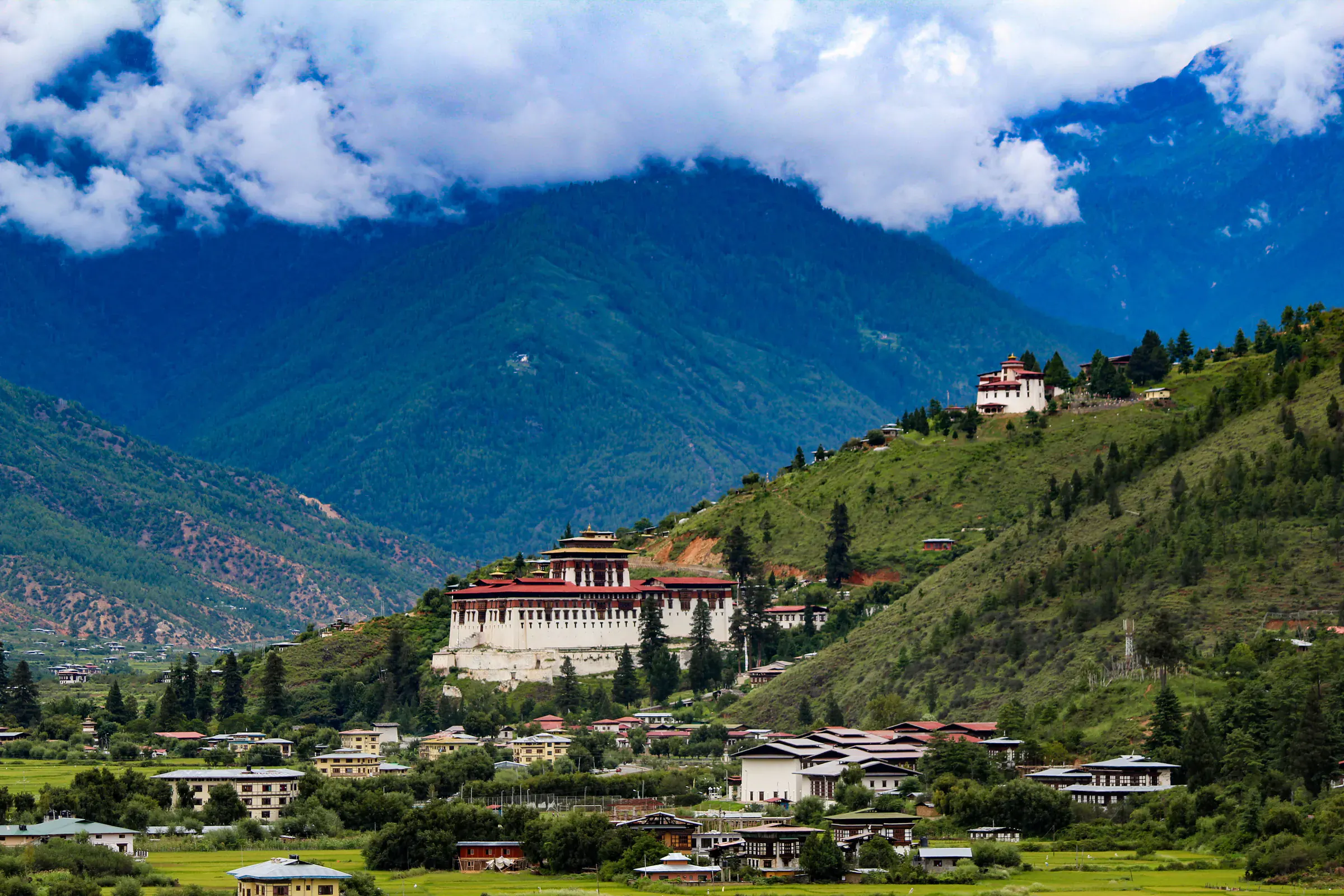
Keep day one light. Most flights land late morning, so after you clear immigration and meet your guide, a gentle first afternoon works best while your body adjusts to 2,200m. Rinpung Dzong, the fortress-monastery above the river, is the classic first stop. A walk through Paro town in the evening is enough.
Day 2: Thimphu
Spend the day in Thimphu. Choose from the Memorial Chorten, markets and craft shops, with time for lunch and a break. Ask your guide which visits fit your interests and the day's opening hours.
Day 3: Over Dochula Pass to Punakha
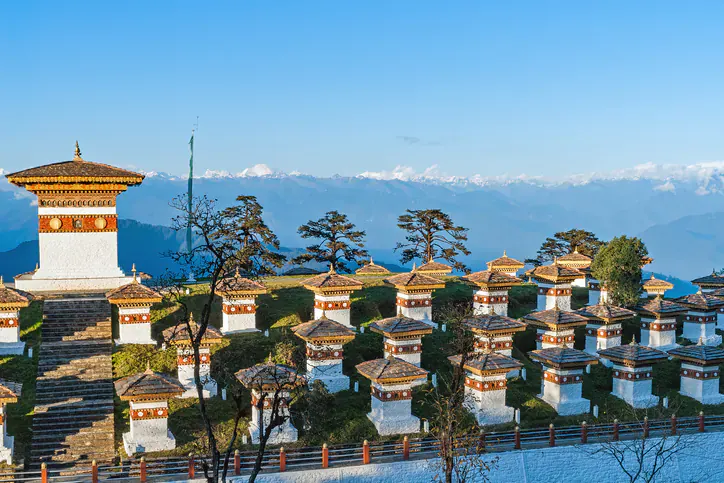
The drive to Punakha climbs to Dochula Pass at 3,100m, marked by 108 chortens and, on a clear morning, a line of Himalayan peaks on the horizon. From there the road descends into a warmer, greener valley.
Punakha Dzong is the one most people remember. It sits at the meeting of two rivers, the Pho Chhu and Mo Chhu, and in spring the jacaranda trees around it bloom purple. It was the seat of Bhutan's government until the 1950s and is still where the king was crowned.
Day 4: Punakha valley
Chimi Lhakhang, the fertility temple linked to the "Divine Madman," is reached by a short walk through rice fields and is one of the more characterful sites in the country. A longer valley walk or the Punakha suspension bridge fills out the day. The lower altitude here (around 1,200m) makes it the most relaxed stop on the route.
Day 5: Back to Paro
Return over the pass to Paro. Keep the afternoon free on purpose. You want to be rested for the hike, and an easy day of a local farmhouse lunch or a hot stone bath is the traditional way to do it.
Day 6: Tiger's Nest
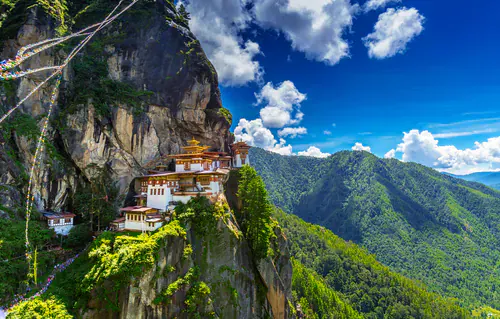
Taktsang, the Tiger's Nest monastery, clings to a cliff 900m above the valley floor. The hike is the highlight of most Bhutan trips and takes roughly 4 to 6 hours round trip depending on your pace. It's a real climb, but the path is well made and there's a cafe at the halfway point. Saving it for the last full day gives you time to settle into the altitude before the walk. We've broken the hike down in detail in our Tiger's Nest hike guide.
Day 7: Departure
Meet your driver for the transfer to Paro Airport. Keep this day free for departure; the seven-day route includes six nights.
What this costs
The biggest fixed cost is the Sustainable Development Fee at $100 per adult per night (confirmed through August 31, 2027), so a 7-day, 6-night trip includes $600 per adult. The one-time visa is $40. Our cost breakdown walks through the full picture.
This 7-day western loop maps almost exactly onto our Essential Bhutan Journey. If you'd rather shape your own version, longer or shorter, you can tell us what you want and we'll build it around the same backbone.
Should you go shorter or longer?
- 5 days works if you cut Punakha and stay between Paro and Thimphu. You save two nights of SDF but have less time for the western valleys.
- 10 days gives you time for two nights in Phobjikha Valley on our Culture & Nature Escape. Reaching Bumthang involves additional travel; use the 14-day itinerary as a starting point for central Bhutan.
- 7 days gives you a starting route through the three western valleys.
Compare the realistic 5, 7, 10, and 14-day routes if you are still deciding how much time to allow.
A licensed guide is required for cultural sites regardless of how you arrange the rest, so this is not a trip you do fully independently. The upside is you're never navigating logistics on your own.
Itinerary timing and site access can shift with weather, road conditions, and local festival dates. Your final day-by-day is confirmed with your guide before travel.