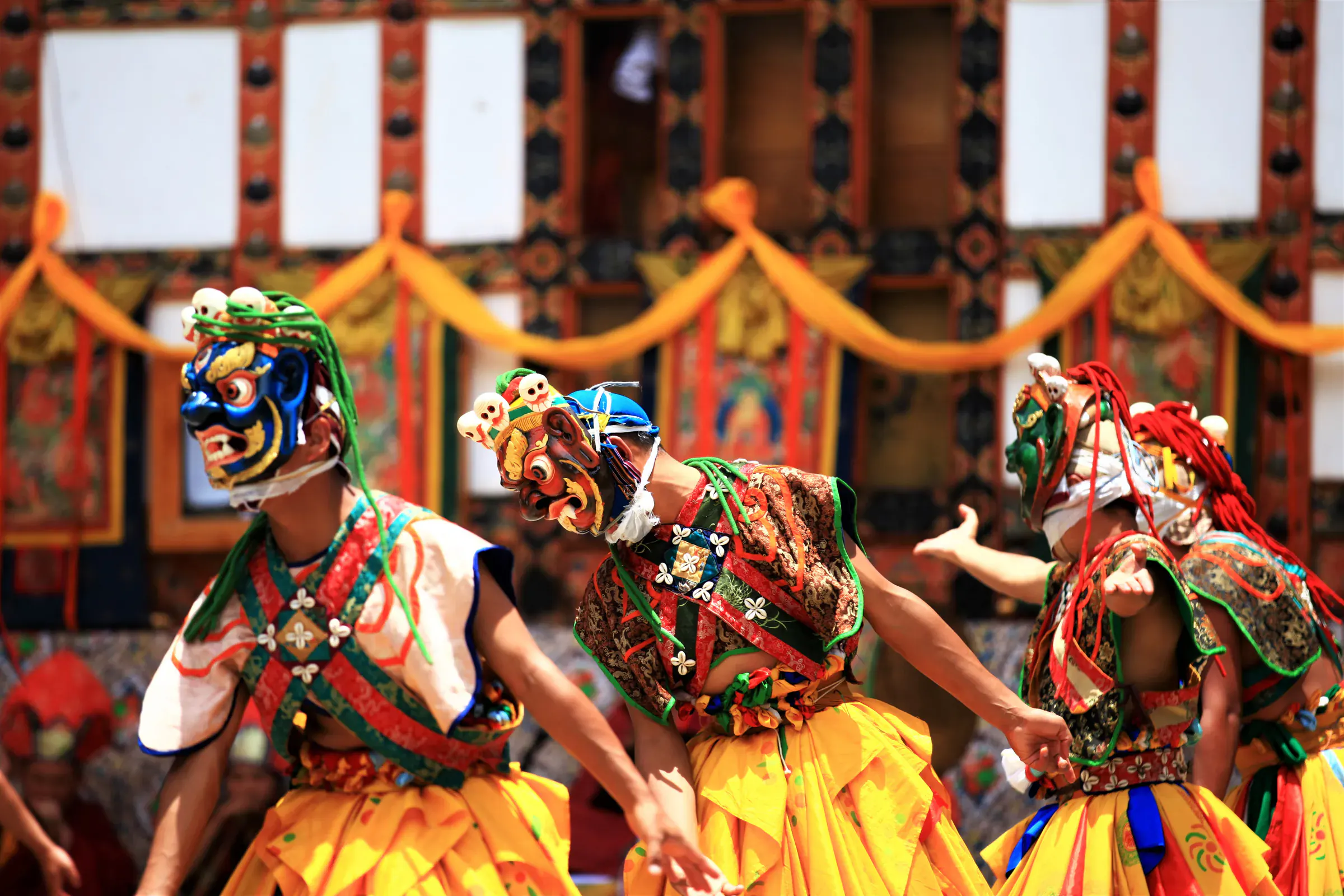
A tshechu brings a community together for sacred masked dances and blessings. Visitors are welcome at public celebrations, but the programme follows religious observances. Plan enough time to watch, ask your guide about the dances and take a break when you need one.
What a tshechu is
The word means "tenth day," for the day of the lunar month on which most are held. Every tshechu honours Guru Rinpoche, the 8th-century master who brought Buddhism to Bhutan, and each district holds its own at a different time of year, which is why there's almost always one happening somewhere.
The heart of every tshechu is the cham: sacred masked dances performed by monks and laypeople in brocade costumes. They're rituals, not shows, each one a form of blessing. The ones you'll see most often are the Black Hat dance subduing evil spirits, the dance of the terrifying deities, the UNESCO-recognised Dramitse drum dance, and the dance of the stags and hounds, which tells the story of the saint Milarepa converting a hunter.
Around the dances is a full community occasion: food stalls, archery matches, families picnicking in their best gho and kira, and a lot of catching up between relatives.
The major festivals
- Paro Tshechu (March/April): the most famous, five days ending with the dawn unfurling of a giant thongdrel
- Thimphu Tshechu (September/October): the biggest by attendance, and the easiest logistics of any major festival
- Thimphu Drubchen (September): the solemn prayer ritual just before Thimphu Tshechu, which most visitors never see
- Kurjey Tshechu (June): small, sacred, and nearly tourist-free in the Bumthang valley
- Punakha Drubchen (February/March): dramatic reenactments of 17th-century battles at Punakha Dzong
- Jambay Lhakhang Drup (October/November): famous for its fire ceremony and night-time ritual dances
Dates follow the lunar calendar and shift every year, our festival calendar has the current ones.
Etiquette
Cover shoulders and knees, remove hats in temple areas, move clockwise around religious structures, and don't point your feet at altars. Photography of the dances is generally fine without flash; ask before photographing individuals, and put the camera down when your guide says so.
Planning around a festival
Allow time for booking, long festival days and changes to the programme.
Book early. Festival weeks are the busiest of the year. For Paro or Thimphu Tshechu, 4 to 6 months ahead is realistic for good accommodation.
Expect long days and crowds. Dances run from morning to late afternoon and the courtyard fills up. Bring a cushion, snacks, water, and sun protection, then settle in. The crowd is part of the experience.
Stay flexible. Programmes shift with the ritual calendar. Ask your guide about the day's schedule and the meaning of the dances you see.
Our Festival Journey is built around exactly this, timed each season to a major tshechu with accommodation, transport and a guide who can explain what you're watching. Viewing positions depend on public access and the crowd on the day.
Contact us if you're weighing which festival fits your dates, we can help you choose a route around it.