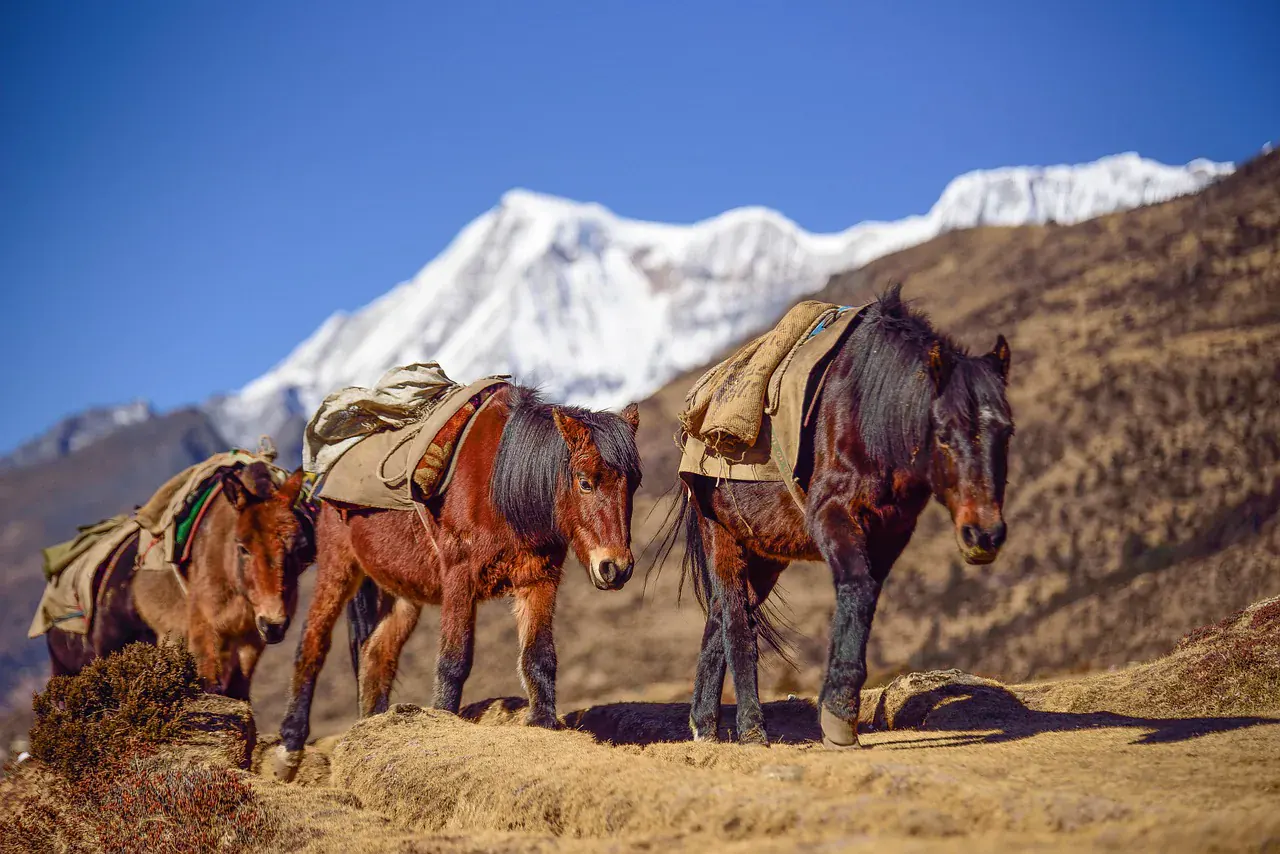
The Snowman Trek is often called one of the hardest treks in the world. It crosses Bhutan's remote north on foot over around 25 days, covering more than 300 kilometres and eleven high passes, several of them above 5,000 metres. Many groups who set out don't finish, usually because snow closes a pass.
This guide covers the route, the weather window, what it really takes and what it costs, and the shorter treks that prepare you for it.
The route
There's no single fixed itinerary, but most versions follow the same line across the north:
- Paro to Jomolhari base camp. The first days follow the same trail as the Jomolhari Trek, up the Paro valley to Jangothang beneath Jomolhari.
- Lingshi and Laya. The route crosses into yak-herding country around Lingshi, then on to Laya, a highland village known for its people's conical bamboo hats.
- Lunana. The heart of the trek: a remote region of glaciers, lakes and scattered villages that's days from the nearest road, with the trek's highest passes.
- The way out. Most groups leave Lunana south towards Sephu on the road to Trongsa, or east towards Bumthang.
Published figures vary. Wikipedia gives the length as 347 kilometres, and operators list the highest pass at between about 5,200 and 5,300 metres, depending on the route and the source.
How hard is it?
The distance is only part of it. What makes the Snowman hard is how long you spend high up:
- Altitude. Most nights are spent above 4,000 metres, and the highest passes go well above 5,000 metres.
- Length. Three to four weeks of walking, often 6 to 8 hours a day, with few rest days.
- Remoteness. Large stretches are days from the nearest road. In an emergency, evacuation usually means a helicopter, weather permitting.
- Cold. Nights below freezing are normal, even in the best season.
When a race was held along the route in 2022, more than 12 of its 29 competitors developed altitude sickness and didn't finish. Trekkers moving at a normal pace have more time to adjust, but the altitude catches out fit people too.
To be accepted on a Snowman departure, you should have done several multi-day treks at altitude before, ideally including nights above 4,500 metres.
When to go
The window is short. Late September to mid-October usually gives the best chance:
- Summer (June to August) is monsoon season, with muddy trails, high rivers and cloud hiding the peaks.
- From November, snow can close the highest passes for the season.
Even in October, an early snowfall can block a pass and force a group to turn back or leave early. Build spare days into your plans, and go in accepting that you might not finish the full route.
What it costs
The government's Sustainable Development Fee alone is USD 100 per adult per night, so a 25-night trek comes to about USD 2,500 in SDF before anything else. On top of that, a Snowman Trek needs a licensed trekking guide, a cook and camp crew, pack animals and their handlers, tents and camping equipment for weeks, plus your visa (USD 40).
Every departure is planned and priced for its own dates, group size and route, so there's no single price. Budget too for travel insurance that covers trekking at altitude and helicopter evacuation, since standard policies often don't.
Train for it on shorter treks
The best preparation is a shorter Bhutanese trek first:
- Druk Path Trek: five trekking days between Paro and Thimphu, up to about 4,200 metres. A good first trek in Bhutan.
- Jomolhari Trek: eight trekking days with two passes close to 4,900 metres. It follows the Snowman's opening days, so it's the most honest test of how you'll cope.
If you're seriously thinking about the Snowman, tell us about your trekking experience and the year you have in mind, and we'll talk it through with you. Our Bhutan trekking tours page covers the other routes.
Official sources
Check the official rules and schedules for your nationality and travel dates before making fixed bookings.